2026-03-14
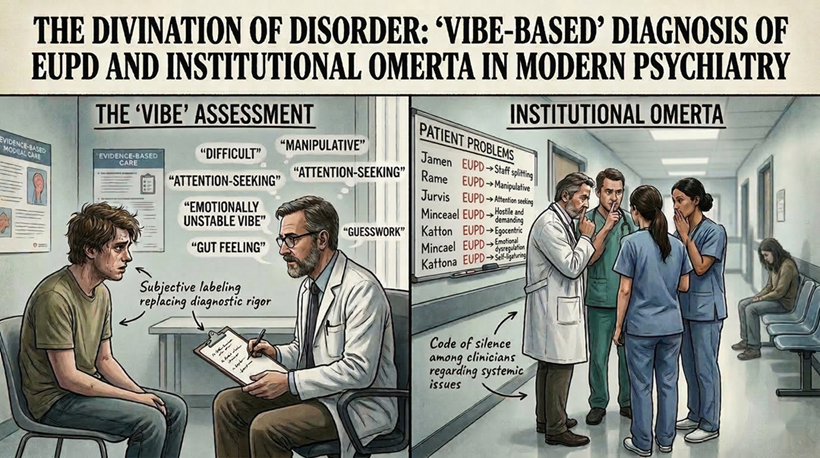
The Divination of Disorder: ‘Vibe-based’ Diagnosis of EUPD and Institutional Omerta in Modern Psychiatry
In the world of physical medicine, there is a concept known as “ground truth.” If a patient presents with chronic abdominal pain, a surgeon does not simply “divine” the presence of appendicitis based on the patient’s personality or the “vibe” of the consultation. There is a verifiable chain of evidence based on physical examination, blood markers, and imaging. If a surgeon operates on a healthy appendix because they “felt” it was diseased without proper diagnostics, they’re courting a malpractice claim. Not everyone knows that psychiatrists are medical doctors. They are. This means that they must adhere to standards and principles