Articles for category: Medical

Like Donald Trump: Conditional Generosity in the NHS Labyrinth

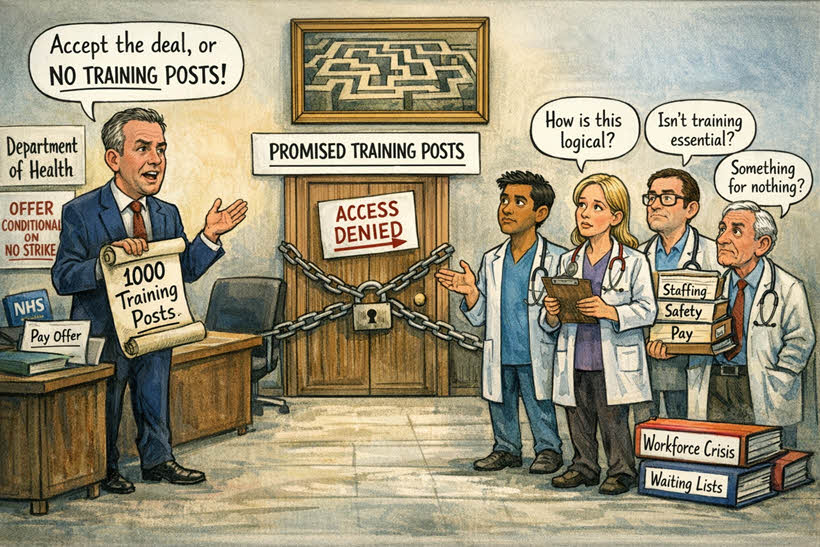
In the continuing chronicle of Britain’s health‑service governance, the latest development arrives with all the subtlety of a departmental memo announcing that oxygen will henceforth be rationed. The Health Secretary, Wes Streeting, has declared that the thousand additional specialty training posts—previously heralded as a strategic investment in the future workforce—will now be contingent upon resident doctors refraining from industrial action (in BMJ). This conditionality is presented not as coercion but as a sophisticated mechanism of partnership, a term which here appears to mean that one party dictates terms while the other is invited to be grateful. But the logic –
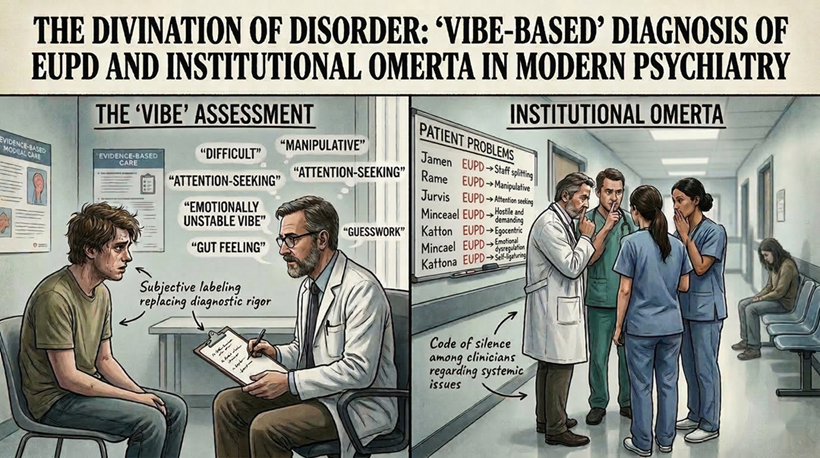
The Divination of Disorder: ‘Vibe-based’ Diagnosis of EUPD and Institutional Omerta in Modern Psychiatry

In the world of physical medicine, there is a concept known as “ground truth.” If a patient presents with chronic abdominal pain, a surgeon does not simply “divine” the presence of appendicitis based on the patient’s personality or the “vibe” of the consultation. There is a verifiable chain of evidence based on physical examination, blood markers, and imaging. If a surgeon operates on a healthy appendix because they “felt” it was diseased without proper diagnostics, they’re courting a malpractice claim. Not everyone knows that psychiatrists are medical doctors. They are. This means that they must adhere to standards and principles

The Mental State Examination: What’s That?

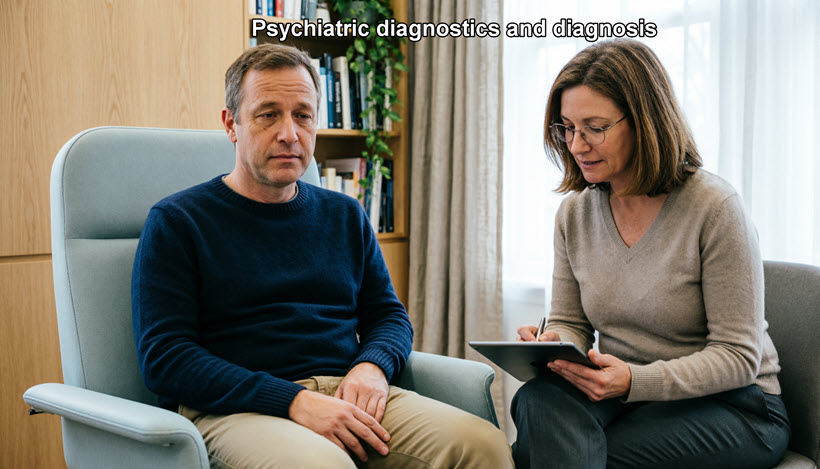
If you have ever been assessed by a psychiatrist, you would probably have undergone a Mental State Examination. You probably did not realise it at the time. There were no needles, no scans, no machines. Instead, there was a conversation, and someone watching and listening with particular care. The Mental State Examination is to psychiatry what a physical examination is to the rest of medicine. It is the way a psychiatrist gathers evidence about what is happening in a person’s mind right now and over previous days to months. And how it is done—and how it is written down—matters far

What Does Psychiatric Diagnosis Really Mean?

When someone goes to a doctor, they usually want two things: to understand what is wrong, and to know what can be done about it. The name given to the problem is the diagnosis. But how that name is arrived at, and what it actually means for the person living with it, is often a mystery. This piece is about that mystery. It separates two things that are usually tangled together: the process of finding an answer, and the meaning of the answer once it is found. For more detailed work on this topic, see: Understanding Diagnostics in Diagnosis: The

The View from the Coalface: Reclaiming the Soul of Psychiatry

If you visit an official medical website to learn about mental health, you will find a version of psychiatry that is tidy. It is a world of clear pathways, professional consensus, and institutional calm. But if you have ever actually been inside that system—whether as a patient, a family member, or a clinician—you know that the “tidy” version rarely matches the reality on the ward or in the clinic. Psychiatry is not just about psychiatrists. It is truly about all the professionals who work together to create optimal outcomes for people with mental health problems. The official view exists for